

Artical
How is Groundwater Detected Before Drilling? Top 2026 Guide
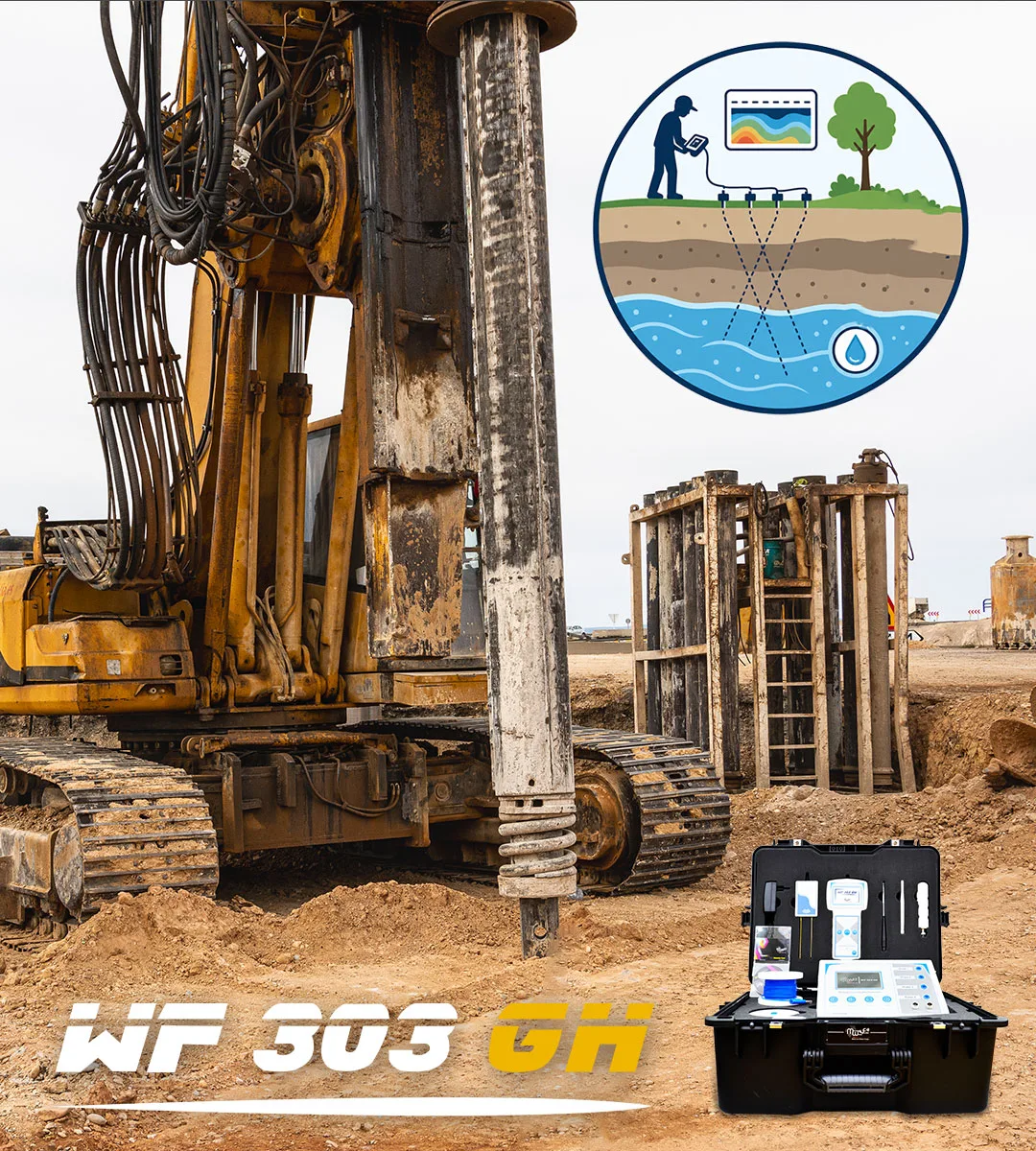
💧 How is Groundwater Detected Before Drilling Wells? The Ultimate 2026 Guide
Drilling a water well is a massive financial investment. Homeowners, farmers, and commercial developers face significant risks when searching for reliable water sources. Digging blindly often results in dry holes, wasted thousands of dollars, and immense physical frustration. Therefore, knowing exactly how groundwater is detected before drilling is absolutely essential.
Historically, finding water relied on guesswork or ancient myths. Today, modern science has revolutionized the hydrogeology industry. Engineers use highly advanced geophysical instruments to map the subsurface of the earth. These modern tools guarantee precise locations, exact depths, and even the salinity levels of hidden aquifers.
In this comprehensive guide, we will explore the exact scientific methods professionals use to find water. We will review global water statistics and geological principles. Finally, we highly recommend the revolutionary WF 303 GH device. It represents the pinnacle of water detection technology in 2026, ensuring you never drill a dry well again.
🌍 The Critical Importance of Groundwater Today
In order to know how groundwater is detected before drilling We must know this general information first, Water scarcity is rapidly becoming a global crisis. Surface water sources like rivers and lakes are drying up at an alarming rate due to climate change. Consequently, humans rely increasingly on subterranean reservoirs to survive. Understanding the vastness of these hidden resources helps us appreciate the need for precise detection.
According to scientific data, groundwater makes up approximately 99 percent of all liquid freshwater on Earth. It sustains nearly half of the global population’s drinking water. Furthermore, the agricultural sector heavily depends on it. Around 40 percent of all global irrigation water comes directly from underground aquifers.
You can read more about these vital subterranean resources on Wikipedia’s Groundwater page. Given its supreme importance, we cannot afford to guess where this water hides. Accurate detection technologies protect our financial resources and our environment simultaneously.
🔍 Why You Must Detect Groundwater Before Drilling
Groundwater Detected Before Drilling: Skipping the detection phase is the most expensive mistake a landowner can make. Drilling companies charge by the foot or meter, regardless of whether they strike water. If they dig 200 meters and hit solid, dry bedrock, you still pay the full invoice. This scenario bankrupts many small farming operations.
Geophysical detection completely eliminates this severe financial risk. A proper survey tells you the exact coordinates of the strongest water vein. It reveals the necessary drilling depth, allowing you to estimate your exact costs beforehand. Knowledge is power, especially when dealing with heavy drilling machinery.
Beyond cost savings, pre-drilling detection protects the environment. Random drilling can accidentally puncture contaminated zones or disrupt fragile geological structures. By using scientific surveys, we ensure responsible, sustainable extraction of our most precious natural resource.
📉 Traditional vs. Modern Groundwater Detected Before Drilling Methods
Humanity has tried to find hidden water for centuries. Our methods have evolved drastically from superstitious rituals to complex quantum physics. Understanding this evolution helps buyers appreciate the value of modern geophysical equipment.
The table below clearly illustrates the massive differences between ancient guesswork, standard test drilling, and modern geophysical detection.
| Detection Method | Scientific Basis | Financial Risk | Accuracy Level |
|---|---|---|---|
| Water Dowsing (Witching) | None (Ideomotor effect) | Extremely High | Very Low / Pure Luck |
| Blind Test Drilling | Basic Geological Guesses | Very High | Moderate |
| Geophysical Detectors | Electrical Resistivity / Radar | Zero Risk | Extremely High (Up to 99%) |
The Myth of Water Dowsing
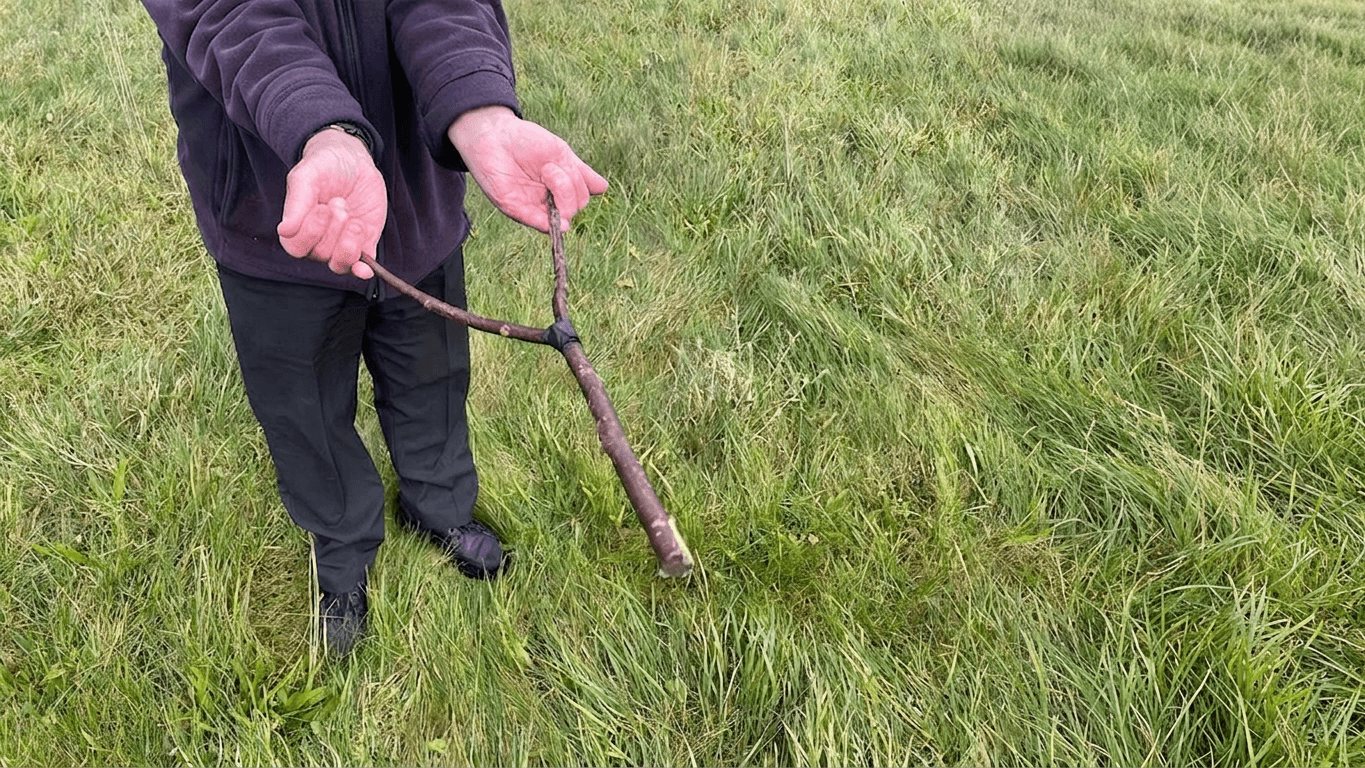
For generations, people used forked wooden sticks to find water. This practice, known as dowsing or water witching, lacks any empirical scientific backing. The movement of the stick is caused by subconscious muscle movements, not underground magnetic fields. Relying on this ancient myth today is a guaranteed way to lose money.
The Rise of Scientific Geophysics
Modern hydrogeology abandons wooden sticks for electronic microprocessors. Scientists measure actual physical properties of the earth, such as electrical conductivity and seismic wave reflection. These tangible metrics provide undeniable proof of water. This shift represents a massive leap forward for agriculture and civil engineering.
🪨 The Role of Geological Surveys in Water Detection
Geophysics is not the only piece of the puzzle. Professional water prospectors also analyze the surface geology. They study topographical maps, rock outcroppings, and historical well data in the surrounding area. Certain rocks, like porous limestone or fractured sandstone, are excellent aquifer hosts.
On the other hand, dense clay layers often trap water or block it entirely. By combining visual geological clues with electronic geophysical data, experts achieve a perfect success rate. You cannot easily find water in solid, uncracked basalt, no matter how deep you drill.
Understanding the geological history of your land is crucial. Areas that were ancient riverbeds or glacial valleys are prime targets for drilling. Modern detectors confirm what the surface geology merely suggests.
⚡ Understanding Electrical Resistivity Tomography (ERT)
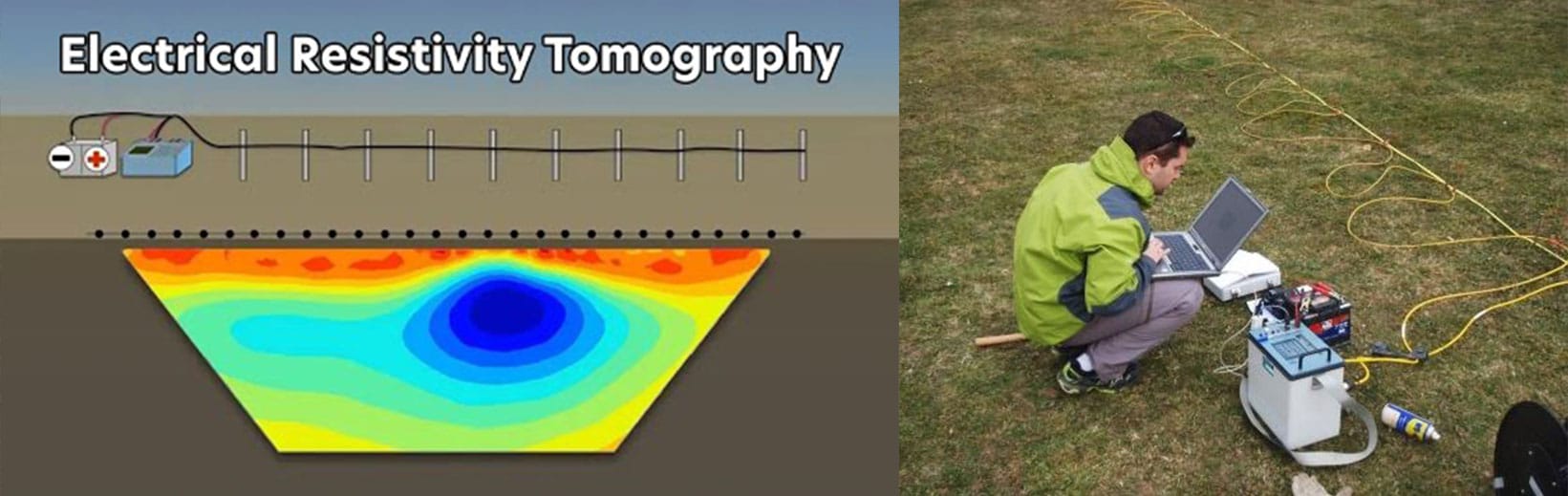
How do the best machines actually “see” underground? The most reliable method is Electrical Resistivity Tomography (ERT). This technique sends controlled electrical currents deep into the soil. Sensors then measure how much resistance the earth puts up against that current.
Different materials naturally possess different resistance levels. Solid granite rock has incredibly high resistance, effectively blocking the electrical flow. Conversely, water—especially mineral-rich or salty water—is a fantastic conductor. It displays a very low resistance reading.
Advanced processors analyze these voltage differences instantly. They generate a clear digital map of the subterranean layers. For a deep dive into the physics behind this, explore Electrical Resistivity Tomography on Wikipedia. This precise science takes all the guesswork out of drilling.
ERT
🚀 Introducing the Ultimate Solution: The WF 303 GH
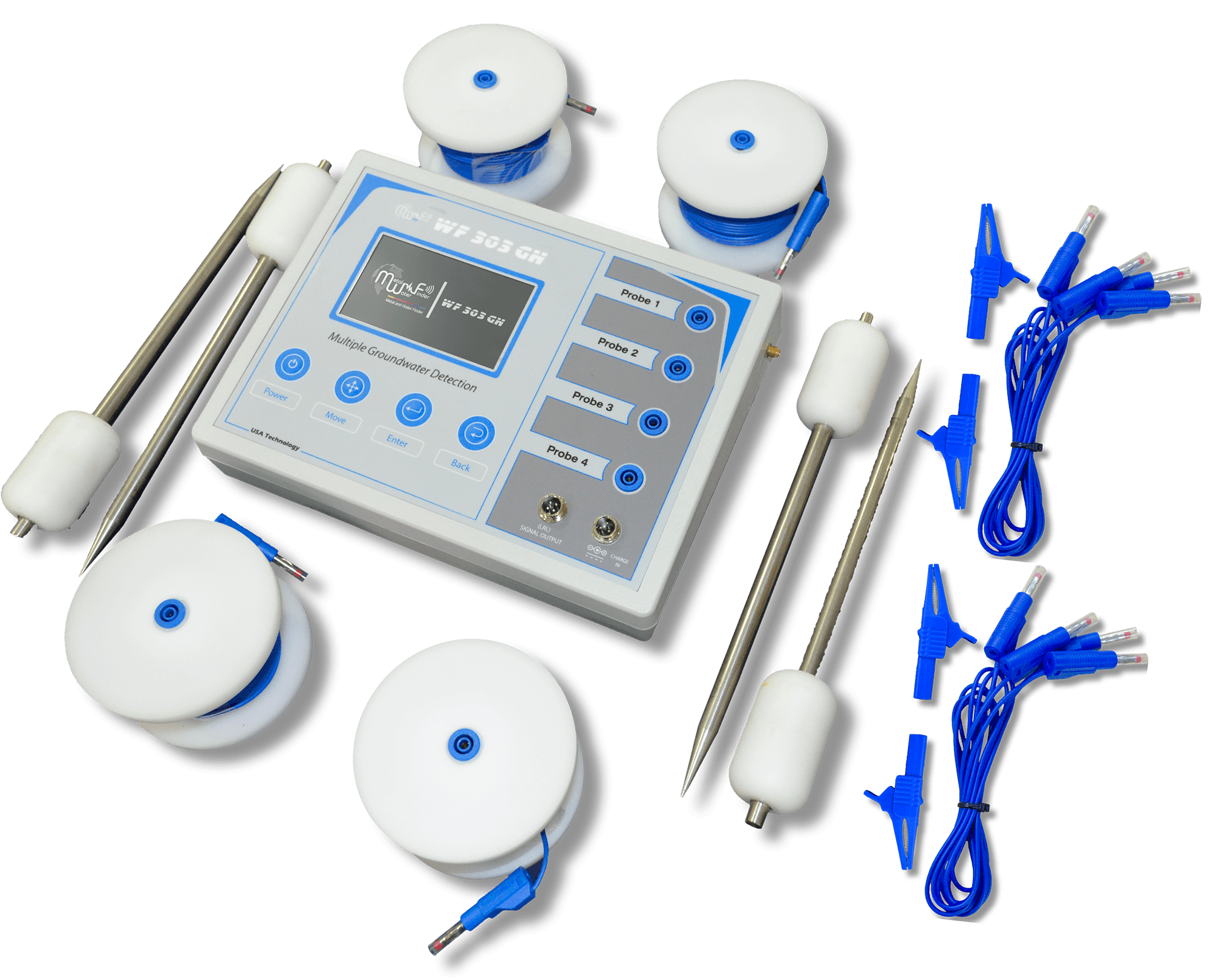
Achieving perfect drilling results requires the absolute best equipment. We strongly recommend the highly advanced WF 303 GH. MWF Group engineered this masterpiece to completely dominate the water detection industry. It combines multiple scanning technologies into one incredibly portable unit.
This machine is built specifically for serious farmers, commercial drilling companies, and professional prospectors. It eliminates the exhausting cycle of random digging and physical fatigue. Users receive a 100 percent guaranteed data report before any heavy machinery arrives on site.
By investing in this device, you take total control of your water supply. It identifies unseen underground obstacles, maps the water density, and secures your agricultural investments. It is truly an engineering marvel.
WF 303 GH
Unmatched Depth and Long-Range Tracking
Standard detectors struggle to see past 100 meters. The WF 303 GH shatters those limitations. It confidently detects fresh water up to a staggering 1000 meters deep. This extreme depth capability ensures you can access safe, uncontaminated deep aquifers.
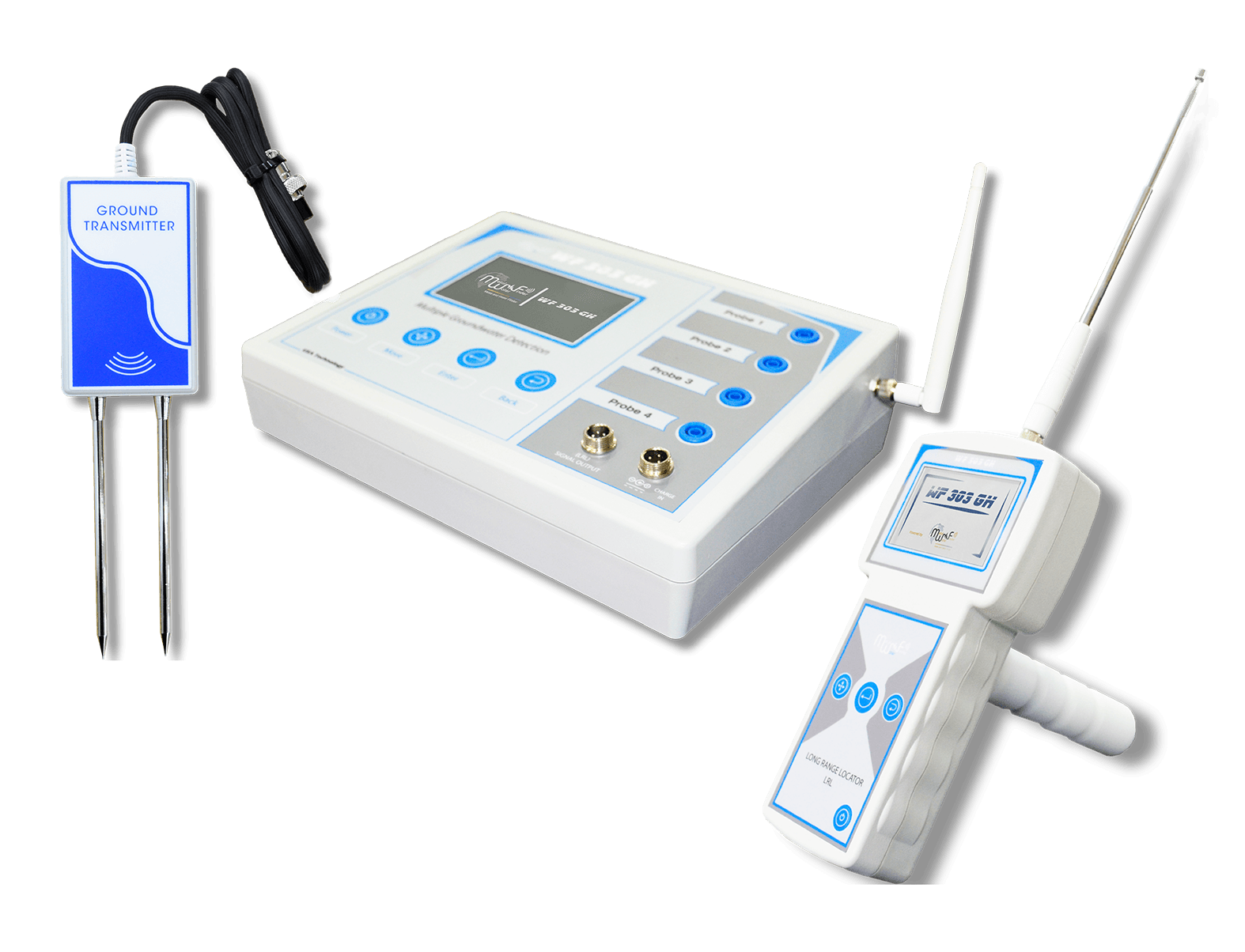
Additionally, it features an exclusive Long-Range Locator (LRL) system. This system scans a forward distance of two kilometers. You do not need to walk blindly across massive fields. The device actively guides you toward the strongest water source using audio and visual cues.
Long Range Locator System
Smart Automatic Tuning System (ATS)
Soil composition changes dramatically from one farm to the next. The WF 303 GH handles these variations perfectly using its Automatic Tuning System (ATS). This smart software instantly recognizes the specific soil type—whether sandy, rocky, or clay—and calibrates itself.
It actively filters out false signals caused by highly mineralized rocks or natural radiation. Older machines often trigger false positives in mountainous regions. The ATS technology ensures your readings are purely based on actual water presence.
Precise Water Discrimination (Fresh, Salty, Mineral)
Finding water is useless if it is highly saline and destroys your crops. The WF 303 GH solves this massive problem by analyzing the liquid’s specific electrical signature. It clearly distinguishes between fresh, salty, and mineral water.
You will know the exact water quality before spending a single dollar on drilling. Furthermore, the screen displays the water density and flow rate. This guarantees you tap into a highly productive vein, rather than a weak, stagnant pool.
⚙️ Technical Specifications of the WF 303 GH
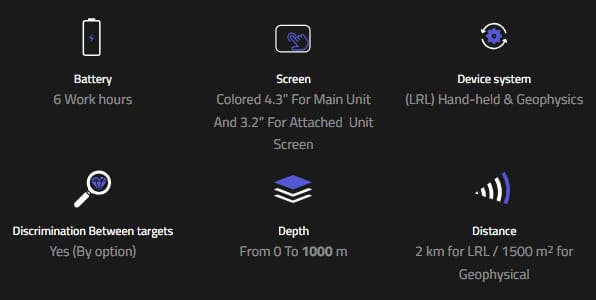
Understanding the hardware inside this machine explains its high success rate. It runs on a lightning-fast ARM 7 microcontroller processor. This chip ensures complex underground data is processed in real-time, delivering immediate results on the screen.
The unit features a bright 4.3-inch TFT color display, making data readable even in the harshest sunlight. Its smart battery system provides six hours of continuous, uninterrupted scanning power. The entire kit is housed in a shock-proof, heavy-duty case.
Here is a quick breakdown of its core technical parameters:
- Maximum Scan Depth: Up to 1000 meters straight down.
- Forward Scan Range: 2 kilometers via the LRL system.
- Processing Speed: Real-time ARM 7 architecture.
- Total Weight: 11.5 kg (fully packed for field transport).
- Operating Temperatures: Reliable from -15°C up to 60°C.
🛠️ Step-by-Step Guide: How to Use the WF 303 GH
Operating this advanced geophysical tool is surprisingly straightforward. You do not need a Ph.D. in physics to find water. First, ensure the main battery is fully charged. Arrive at your land and select the Handheld Long-Range Locator (LRL) system to begin your macro-search.
Hold the antennas level and slowly sweep the horizon. The antennas will physically lock onto the strongest water signal. Follow the directional pull until you arrive directly over the target zone. Once you pinpoint the center, it is time to switch to the Geophysical Search System.
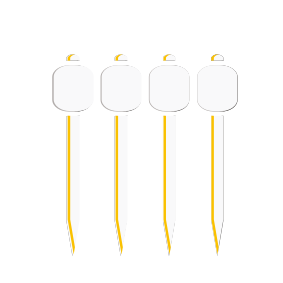
Plant the four metal electro-rods deeply into the soil, forming a square over your target. Connect the cables securely to the main unit. Start the automatic scan and step back. The machine will silently push electrical currents through the earth, gathering precise depth and quality data within minutes.
🌾 Maximizing Agricultural Yield with Guaranteed Water
Farming without a guaranteed water supply is essentially gambling. Droughts can wipe out an entire season of hard work in just a few weeks. Securing a high-volume, continuous water source is the ultimate insurance policy for your agricultural business.
When you use precise detectors, you target the most abundant aquifers. High water density means you can run powerful irrigation pivots 24/7 without drying out the well. Healthy, hydrated crops produce significantly higher yields and better-quality harvests.
Furthermore, property with a proven, high-capacity water well skyrockets in market value. The initial investment in geophysical technology pays for itself tenfold when your land transforms into a highly profitable, drought-resistant oasis.
📊 Global Statistics on Water Scarcity and Aquifer Depletion
We must treat groundwater with the utmost respect. Global statistics paint a concerning picture of our current usage. In regions like California, the Middle East, and parts of India, the water table is dropping by several meters every single year.
Shallow wells that produced water for decades are now completely dry. Farmers are being forced to drill deeper than ever before. This is exactly why the 1000-meter depth range of modern detectors is no longer a luxury; it is a strict necessity.
We cannot afford to poke random holes in the ground anymore. Using scientific mapping ensures we target sustainable, large-scale aquifers efficiently. For more sobering facts on this global issue, visit Wikipedia’s Water Scarcity page.
❓ Frequently Asked Questions (FAQs) About Groundwater Detected Before Drilling
Many landowners have questions before making the leap from traditional drilling to geophysical surveys. We have compiled the most common inquiries to help you understand the process better. These answers provide clarity for your upcoming water exploration projects.
Can detectors really tell if the water is salty?
Yes, highly advanced models can. Salty water has a much higher electrical conductivity than fresh water. The WF 303 GH measures these exact resistance levels and displays the water type automatically on its screen.
How deep do I usually need to drill for water?
This varies wildly depending on your geographical location. Some valleys have water at 30 meters, while arid plateaus might require drilling down to 600 meters. A geophysical detector gives you the exact number before you hire a driller.
Does rocky terrain ruin the detector’s signal?
Cheap, older detectors struggle with rocky or mountainous terrain due to mineral interference. However, premium devices feature Automatic Tuning Systems (ATS). They filter out the false signals from solid granite and focus only on the water.
Is it difficult to learn how to use a geophysical detector?
Not at all. The best modern devices are designed with user-friendly digital interfaces. They provide clear text prompts, visual charts, and audio cues. Anyone can learn to conduct a professional survey with a few hours of practice.
Why do drilling companies still drill dry wells?
Many traditional drillers do not invest in geophysical surveying equipment. They rely on outdated maps or simple visual guesses. They get paid for drilling the hole, whether they find water or not. As the landowner, the financial risk is entirely yours.
✅ Conclusion: Stop Guessing and Start Detecting Befor Groundwater Detected Before Drilling
Securing a reliable, pure water source is arguably the most important task for any landowner or farmer. Relying on outdated myths or blind luck is a dangerous financial game. Traditional drilling methods simply carry too much risk in today’s unpredictable climate. You need absolute scientific certainty.
The WF 303 GH provides that certainty. It seamlessly blends extreme long-range tracking with flawless geophysical depth mapping. It tells you exactly how deep the water is, how dense the vein is, and whether the water is fresh or salty.
By investing in modern detection technology, you save immense amounts of money, protect your land, and secure your agricultural future. Stop guessing where the water is hiding. Use the power of science and locate your perfect well site today.
 GOLD DETECTORS
 METAL DETECTORS
 TREASURES
 GEMS DETECTORS
 WATER DETECTORS
 CAVES DETECTORS
 SECURITY SYSTEMS
 VOGEL DETECTORS
 PORTABLE METAL DETECTORS
 Ground Imaging Systems
 Long Range Locator Systems
 Geophysical Survey Systems
 U-VLF SYSTEM
 Ionic Search Systems
 .Acoustic detection Systems
 Integrated Detection Systems
 Hand-held & Pinpointer Systems