

Artical
Underground Metal Detectors: Depths and Accuracy

Underground Metal Detectors: Depths and Accuracy (With MWF Recommendations)
First and foremost, the pursuit of hidden treasures, ancient artifacts, and raw gold veins is a journey that requires far more than just passion and luck. Naturally, every treasure hunter dreams of making a monumental discovery. However, as surface-level targets become increasingly scarce due to decades of amateur prospecting, the real treasures are now hidden far beneath our feet. This brings us to a highly critical subject: underground metal detectors, and specifically, their capabilities regarding extreme depths and pinpoint accuracy.
Consequently, many beginners and even intermediate prospectors find themselves deeply frustrated. They purchase standard equipment, hoping to unearth deep gold hoards, only to realize their machines cannot penetrate beyond a mere few inches of topsoil. Therefore, understanding the complex physics of underground metal detection, the limitations of basic technology, and the power of advanced geophysical systems is absolutely essential. You cannot dig blindly; you need equipment that acts as your eyes deep into the earth.
In this comprehensive, highly detailed guide, we will thoroughly explore the world of underground metal detectors. Furthermore, we will break down the science of detection depths, the critical importance of target accuracy, and the environmental factors that block standard signals. Ultimately, armed with this vital knowledge, we will provide an expert recommendation for the elite, deep-seeking devices manufactured by MWF Metal Detectors, ensuring your next expedition is both successful and highly rewarding.

📊 The Global Shift to Deep Underground Exploration: Facts and Statistics
Before we delve into the intricate physics of detection depths, it is incredibly beneficial to understand the global landscape of this industry. Undeniably, metal detecting has evolved from a casual beach hobby into a sophisticated, highly lucrative scientific pursuit.
- The Depletion of Surface Gold: According to geological experts, the “easy” surface gold has largely been found. Historically, humanity has mined approximately 201,296 tonnes of gold. However, it is estimated that the remaining 50,000 tonnes are trapped in deep underground reserves or hidden within complex geological structures. You can read more about the historical extraction of this precious metal on the official Gold Wikipedia page.
- Technological Necessity: Because surface targets are depleting, the global market for advanced underground metal detectors (specifically 3D ground scanners and Long-Range Locators) is experiencing unprecedented growth. Professional prospectors are upgrading their equipment to reach depths previously thought impossible.
- Archaeological Significance: Furthermore, professional archaeologists rely heavily on deep-seeking ground penetrating radar and advanced metal detectors to map ancient cities and locate historical tombs without destructive excavation. Learn more about the evolution of these devices on the Metal Detector Wikipedia page.
To visualize the necessity for deep-seeking equipment, consider this text-based statistical chart representing the average depth of significant treasure discoveries over the last few decades:
| Decade | Average Depth of Major Discoveries | Primary Technology Used |
|---|---|---|
| 1980s | 10 to 30 centimeters | Basic VLF Detectors |
| 1990s | 30 to 60 centimeters | Advanced VLF & Early PI |
| 2000s | 1 to 2 meters | Pulse Induction (PI) |
| 2020s (Present) | 5 to 30+ meters | 3D Geophysical & LRL Systems |
📏 The Reality of Depths: How Deep Can Underground Metal Detectors Really Go?
Undeniably, the most frequently asked question in the prospecting community is: “How deep does this detector go?” Unfortunately, there is no single, simple answer. The depth capability of an underground metal detector is a complex scientific equation depending heavily on the technology used.
1. Very Low Frequency (VLF) Detectors (Shallow Depths)
Generally, Very Low Frequency (VLF) is the most common technology found in hobbyist metal detectors. These machines operate by sending a continuous alternating current into the ground. Consequently, VLF devices are exceptionally good at finding small, shallow targets like coins and rings.
However, their depth is severely limited. Under optimal conditions, a high-end VLF machine might detect a large coin at 10 to 14 inches (25 to 35 cm) deep. If the target is very large, like a metal chest, it might reach up to 1 meter. Therefore, VLF is not suitable for deep underground exploration.


2. Pulse Induction (PI) Detectors (Medium to Deep)
On the other hand, Pulse Induction (PI) technology is heavily favored by serious gold prospectors. Instead of a continuous wave, a PI detector fires short, powerful bursts (pulses) of electrical current into the ground.
Consequently, PI technology allows the magnetic field to penetrate much deeper into the earth, entirely ignoring the highly mineralized soil that blinds VLF machines. A high-quality PI detector equipped with a large search coil can detect large metallic targets at depths ranging from 1.5 to 3 meters. Thus, it represents a significant leap in depth capability.


3. 3D Geophysical Scanners (Extreme Underground Depths)
Ultimately, when we talk about true underground metal detectors, we must discuss 3D Geophysical and Bionic scanners. These devices do not use standard electromagnetic coils. Instead, they measure the electrical resistance and magnetic anomalies within the earth.
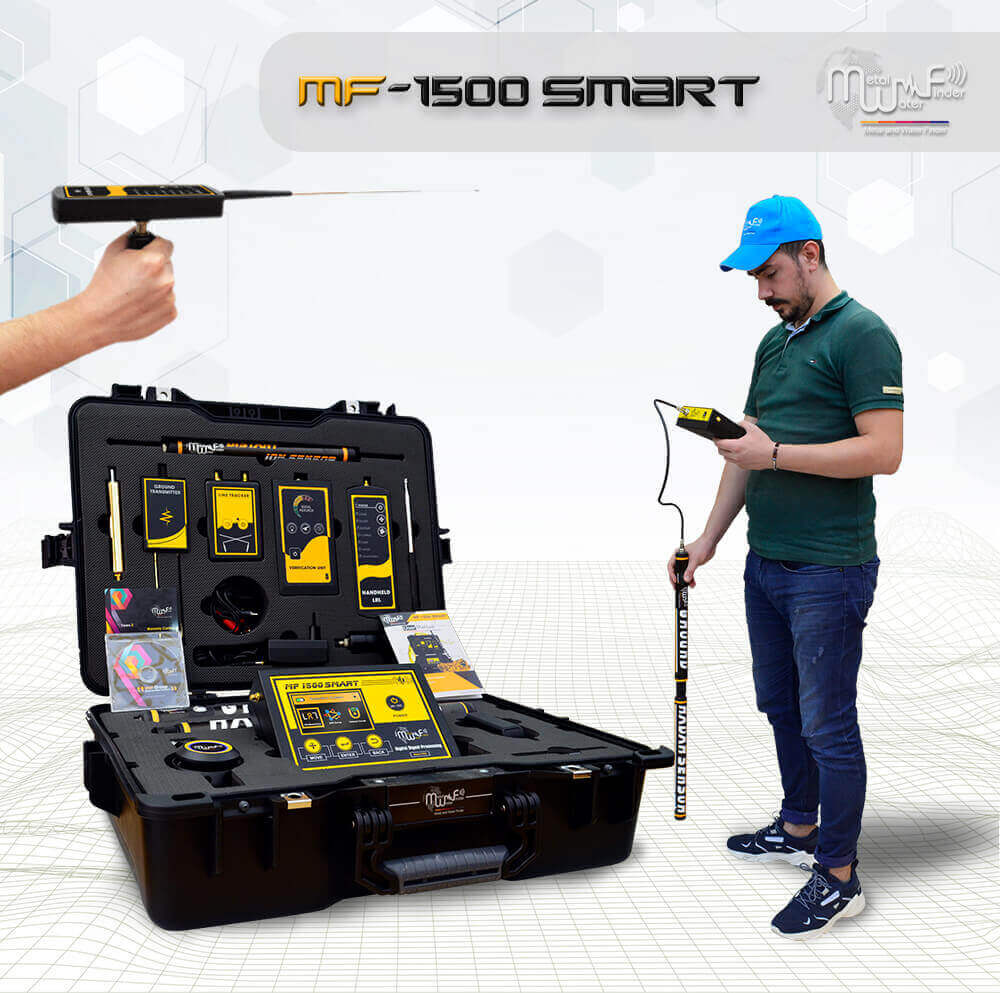
Therefore, these advanced systems can penetrate to astonishing depths. Depending on the soil composition and the sheer size of the buried target (such as an ancient tomb, a massive gold hoard, or a deep cave), geophysical scanners can accurately reach depths of 20, 30, or even 40 meters underground. This is the absolute pinnacle of deep exploration.

🌍 The Four Pillars of Depth: Environmental and Physical Factors
Even with the most powerful underground metal detector in the world, the physical environment plays a massive role in how deep the signal can travel. Therefore, understanding these four pillars is crucial for maximizing your machine’s capabilities.
1. The Size and Surface Area of the Target
First and foremost, the size of the buried metal is the most significant factor. A tiny gold flake will only be detectable at a few inches, regardless of the machine. Conversely, a massive iron cannon or a large chest of gold coins creates a massive disruption in the magnetic field, allowing the detector to “see” it from several meters away. The larger the surface area facing the detector, the deeper it can be found.
2. The “Halo Effect” Over Time
Secondly, the length of time an object has been buried drastically affects its detectable depth. When a metal object (like a copper coin or an iron sword) sits in wet soil for centuries, it slowly oxidizes and leaches chemicals into the surrounding dirt.
Consequently, this chemical leaching creates an invisible, highly conductive “halo” around the object. Therefore, the metal detector sees this large conductive halo rather than just the small coin, making ancient targets appear larger and allowing them to be detected at much greater depths than freshly buried items.
3. Soil Mineralization and “Hot Rocks”
Furthermore, the earth itself is often the biggest enemy of depth. Soil that is rich in iron oxides, salt, or magnetic minerals creates a solid wall of interference. If you use a basic detector over highly mineralized soil, the machine will scream constantly, blinding you to actual targets.
Consequently, deep-seeking underground metal detectors must feature advanced “Ground Balancing” microprocessors. These systems actively measure the background mineralization of the soil and cancel it out, allowing the signal to push through the bad dirt and reach the hidden treasure below.
4. Search Coil Size
Finally, if you are using a VLF or PI machine, the size of your search coil dictates your depth. A small coil (like a 5-inch) is highly sensitive to tiny surface targets but cannot penetrate deeply. Conversely, a massive coil (like a 1 meter by 1 meter frame) sacrifices sensitivity to tiny objects but pushes the electromagnetic field incredibly deep into the earth to find large, buried hoards.
🎯 Accuracy in Underground Metal Detection: Finding the Right Target
While extreme depth is impressive, it is completely useless without high accuracy. Imagine spending three days digging a 5-meter deep hole, only to uncover a worthless, rusty iron pipe instead of a chest of gold. Therefore, true underground metal detectors must possess advanced discrimination and targeting features.
Advanced Target Discrimination
Specifically, every metal conducts electricity differently. High-end underground detectors utilize advanced microprocessors to measure the exact electrical conductivity and phase shift of the buried target. Consequently, the machine can analyze the signal returning from 10 meters deep and accurately inform the operator whether the object is precious gold, highly conductive silver, or worthless iron.
3D Visual Accuracy and Shape Rendering
Moreover, the greatest leap in detection accuracy is the advent of 3D imaging. Professional geophysical scanners do not just “beep.” Instead, they send data to a high-resolution screen or a connected tablet, rendering a three-dimensional, color-coded image of the underground area.
Therefore, the operator can visually see the exact shape, size, and depth of the target. You can clearly distinguish the sharp, rectangular outline of a buried chest from the irregular, natural shape of a metallic rock. This level of accuracy saves professionals hundreds of hours of unnecessary, back-breaking excavation.
🏆 Why MWF Devices Dominate in Depths and Accuracy
After understanding the immense challenges of deep earth penetration, severe soil mineralization, and the need for pinpoint accuracy, it becomes perfectly clear why cheap, entry-level detectors fail. Consequently, if you are serious about finding profound, life-changing underground treasures, you must invest in elite, professional-grade equipment.
Particularly, the MWF (Metal and Water Finder) group, an industry-leading US-Turkish manufacturer, has completely revolutionized the underground exploration market. MWF devices are globally recognized because they successfully combine extreme depth penetration with zero-error accuracy.
Top Reasons MWF Devices Are the Ultimate Choice:
1. Multi-System Hybrid Technology
First, MWF does not rely on just one outdated technology. Instead, they integrate multiple advanced scientific systems into a single, cohesive unit. For example, their advanced models combine Long Range Locators (LRL) for massive distance scanning with Bionic, Acoustic, and 3D Geophysical systems. This allows you to find the target zone from miles away, and then scan the exact spot to verify the target’s precise depth and metal type with 100% accuracy.
2. Overcoming Severe Mineralization (ATS)
Secondly, MWF has solved the biggest problem prospectors face: false signals from bad soil. Their devices are equipped with highly intelligent Automatic Tuning Systems (ATS). This means the device actively analyzes the soil’s composition in real-time and automatically cancels out magnetic rocks and high mineralization. Therefore, the signal pushes deeper, and when an MWF device alerts you, you can dig with absolute confidence.
3. Extreme Depth Capabilities
Furthermore, MWF specializes in deep-earth exploration. While standard detectors struggle past 1 meter, MWF’s advanced geophysical scanners and highly calibrated Long-Range systems are engineered to detect targets at astonishing depths—often reaching 20, 30, or even 40 meters underground, depending on the specific model and target size.
So, if you are ready to upgrade your treasure-hunting experience and utilize the absolute pinnacle of modern deep-seeking detection science, you must explore the latest technologies. Therefore, choose the professional device that perfectly suits your ambitions through the following link: Discover the Complete Collection of MWF Metal Detectors Here.
🌟 Highlighted Recommendation: The Unbeatable MF 1100 PRO
To truly understand the power of MWF’s engineering, we must highlight one of their flagship devices designed specifically for extreme depths and pinpoint accuracy.
Undeniably, the MF 1100 PRO is considered the absolute pinnacle of advanced exploration devices in the professional prospecting world. Specifically, this device is explicitly designed to be the primary trusted tool for explorers seeking confirmed, deep-earth results without the frustration of false signals.
- Exceptional Depth Penetration: The device features an astonishing penetration capacity, reaching up to 30 meters underground. This allows professionals to easily locate deep gold veins, hidden caves, and ancient tombs that standard detectors completely miss.
- Vast Search Range: Additionally, its advanced long-range locator system provides a forward scanning range of up to 2,500 meters. Thus, you can effectively sweep massive, legally permitted fields and valleys in a fraction of the time it takes to walk them.
- Total Isolation of False Signals: Ultimately, thanks to its advanced digital signal processors and ATS technology, the MF 1100 PRO excels in isolating the effects of highly mineralized soils, offering an incredible 0% false signal rate.
In conclusion, thanks to these elite, professional-grade features, MWF detectors serve as complete, all-in-one exploration stations. Ultimately, they put legendary treasures, buried valuables, and deep raw gold nuggets within your reach with absolute, unwavering confidence.


❓ Frequently Asked Questions (FAQ) About Underground Metal Detectors
1. What is the maximum depth an underground metal detector can reach?
Generally, depth depends heavily on the technology used and the size of the target. Standard VLF hobby detectors usually reach 10 to 14 inches. Pulse Induction (PI) machines can reach 1.5 to 3 meters for large targets. However, highly advanced professional systems, such as 3D Geophysical Scanners (like those offered by MWF), can detect massive hoards, caves, and gold veins at astonishing depths of 20 to 40 meters.
2. Does the type of soil affect the depth of the detector?
Yes, absolutely. Soil type is one of the most critical factors in depth penetration. Highly mineralized soils (rich in iron oxides, salt, or black sand) create massive electromagnetic interference that blocks standard signals, drastically reducing depth. To achieve great depths in these soils, you must use an advanced detector equipped with Automatic Tuning Systems (ATS) or Pulse Induction technology to bypass the ground minerals.
3. Can an underground metal detector find empty caves or voids?
Traditionally, standard coil-based metal detectors cannot detect empty space; they only react to metal. However, advanced underground detectors that utilize Geophysical scanning technology measure the electrical resistance of the earth. Because an empty cave or a buried tunnel has a completely different resistance than solid dirt, these advanced machines can accurately map and identify underground voids and tombs.
4. Are deep-seeking metal detectors complicated to use?
Historically, professional geophysical equipment required a degree in geology to operate. However, modern engineering has solved this issue. Industry-leading companies like MWF have integrated complex science into highly intuitive, user-friendly interfaces. With high-resolution color screens, multilingual menus, and automated ground balancing, these devices allow passionate amateurs to harness professional-level power with minimal training.
5. Can I use a Long-Range Locator inside a city?
Generally, it is highly discouraged. Long-Range Locators (LRL) are incredibly sensitive devices designed for wide-open spaces, deserts, and vast mountains. Cities are saturated with massive amounts of electromagnetic interference from power lines, cell towers, and underground pipes, which can severely disrupt the precise ionic tracking of an LRL device. They are strictly designed for serious outdoor exploration.
📌 Conclusion: Mastering Depths and Accuracy
In summary, the thrilling world of deep underground treasure hunting is vastly enhanced by choosing the correct, scientifically advanced equipment. Certainly, understanding the deep technological differences between basic surface machines and profound professional exploration systems is the most important step in your journey. If your goal is to mount a professional expedition to uncover deep, historical gold veins or ancient buried tombs, mastering the concepts of soil mineralization, target halos, and 3D accuracy is vital.
Above all, remember that your underground metal detector is your singular set of eyes deep beneath the earth. Therefore, do not compromise your time, physical effort, and massive potential with inferior, outdated technology. By investing in world-class quality devices and thoroughly tested, multi-system technologies—such as those proudly engineered by MWF Metal Detectors—you completely eliminate the frustrating guesswork.
Ultimately, this professional, calculated approach ensures that your hard work, patience, and dedication will be rewarded with magnificent, life-changing discoveries that make the entire adventure immensely worthwhile.
 GOLD DETECTORS
 METAL DETECTORS
 TREASURES
 GEMS DETECTORS
 WATER DETECTORS
 CAVES DETECTORS
 SECURITY SYSTEMS
 VOGEL DETECTORS
 PORTABLE METAL DETECTORS
 Ground Imaging Systems
 Long Range Locator Systems
 Geophysical Survey Systems
 U-VLF SYSTEM
 Ionic Search Systems
 .Acoustic detection Systems
 Integrated Detection Systems
 Hand-held & Pinpointer Systems