
Artical
Best 3D Imaging Gold Detectors in 2026

The Ultimate Guide to the Best 3D Imaging Gold Detectors in 2026: Unveiling the GROUND SCOPE
The pursuit of hidden treasures, ancient artifacts, and deep subterranean gold veins has captivated humanity for thousands of years. In the past, prospectors relied on sheer luck, basic geological knowledge, and rudimentary tools. Today, the landscape of treasure hunting has undergone a massive technological revolution. We have officially entered the era of 3D Imaging Gold Detectors.
These advanced machines no longer just emit a simple audio beep when they pass over a piece of metal. Instead, they provide treasure hunters, archaeologists, and professional prospectors with a high-definition, three-dimensional visual map of what lies beneath the earth. They eliminate the guesswork, save thousands of hours of unnecessary digging, and push detection depths to limits that were once thought impossible by traditional physics.
In this comprehensive, we will explore the fascinating science behind 3D ground scanning technology. We will analyze global industry statistics, discuss the critical features you need to look for, and ultimately reveal why the GROUND SCOPE stands undisputed as the best 3D imaging gold detector on the market today.
🌍 The Evolution of Metal Detection: Moving Beyond Audio
To truly appreciate the power of 3D imaging, we must first understand the limitations of traditional metal detectors. Standard detectors operate primarily on Very Low Frequency (VLF) or Pulse Induction (PI) technologies. These devices generate an electromagnetic field that penetrates the ground. When this field hits a conductive object, it bounces a signal back to the machine, triggering an audio alert.
You can read more about the foundational science of these early systems on the official Wikipedia page for Electromagnetic Induction.
While VLF and PI detectors are fantastic for finding shallow coins or small nuggets near the surface, they suffer from two massive drawbacks:
- Depth Limitations: Traditional coil detectors physically cannot push their magnetic fields deep into the earth. Most standard machines max out at 1 to 2 meters.
- Blind Digging: An audio beep tells you that something is down there, but it cannot tell you what it looks like, its exact depth, or whether it is sitting inside a larger underground cavern. You are essentially digging blind.
This is precisely where 3D Imaging technology steps in to revolutionize the industry.
🔬 The Science Behind 3D Ground Scanners
3D Imaging gold detectors operate on entirely different principles than standard coin shooters. Many of these advanced devices utilize technology derived from Ground-Penetrating Radar (GPR) and advanced electromagnetic resistivity sensors. Instead of simply looking for a magnetic bounce, these devices map the physical anomalies beneath the earth’s surface.
For a deep dive into how these geophysical methods are used in scientific surveys, visit the Ground-Penetrating Radar Wikipedia page.
When an operator uses a 3D ground scanner, they walk in a precise grid pattern over a specific plot of land. The specialized scanning probe sends penetrating signals deep into the soil. The sensors record the resistance, conductivity, and variations in the soil layers. For instance, a solid gold chest will reflect a significantly different signal than a pocket of empty air (a cave) or a natural iron rock.
The device then transmits this massive collection of raw data to a processing unit—usually a high-definition tablet or a built-in screen. Sophisticated proprietary software renders this data into a colored, 3D topographical map. Suddenly, the underground world becomes visible. You can see the target’s shape, measure its exact depth in centimeters, and understand its orientation before you ever pick up a shovel.
📊 Global Statistics: The Rise of 3D Gold Detectors (Best 3D Imaging Gold Detectors)
The global metal detection industry is experiencing unprecedented growth. Professional prospectors and commercial mining companies realize that investing in high-end 3D technology yields a massive Return on Investment (ROI) by drastically reducing excavation costs and time.
According to general market analysis, the global metal detector market size recently surpassed USD 1.4 billion and continues to grow at a Compound Annual Growth Rate (CAGR) of over 6.5%. The fastest-growing segment within this industry is specifically 3D ground imaging systems, driven by the archaeological and professional treasure-hunting sectors.
Data Chart: Detection Depth vs. Technology Type
The following table illustrates a simulated data analysis demonstrating the sheer power of 3D imaging compared to traditional methods. (Data is modeled for educational purposes based on general geophysical surveying principles in moderately mineralized soil).
| Technology Type | Maximum Realistic Depth | Visual Target Identification | Void / Cave Detection | Primary Use Case |
|---|---|---|---|---|
| Very Low Frequency (VLF) | 1 – 1.5 Meters | No (Numbers Only) | No | Shallow Coins & Small Nuggets |
| Pulse Induction (PI) | 2 – 4 Meters | No (Audio Tones) | No | Medium Depth Relics in Harsh Soil |
| Standard GPR Systems | 5 – 10 Meters | Yes (2D/3D Radargrams) | Yes | Utility Mapping & Archaeology |
| Advanced 3D Ground Scanners | 10 – 30+ Meters | Yes (Full 3D Renderings) | Yes (Highly Accurate) | Deep Hoards, Tombs & Treasures |
As the data clearly proves, if your objective is to find deep historical hoards, ancient tombs, or massive gold caches, traditional audio detectors are completely useless. You must upgrade to 3D imaging technology.
⚙️ Key Features to Look for in a 3D Imaging Gold Detector
Investing in a 3D ground scanner is a significant financial decision. To ensure you choose a machine capable of delivering professional results, you must evaluate several critical features:
1. High-Resolution Imaging Software
The hardware is only as good as the software that interprets the data. The best detectors use advanced analytical software that clearly distinguishes between precious metals (usually rendered in red), non-valuable ground minerals (rendered in green or orange), and underground voids or caves (rendered in blue). The software must allow you to rotate the 3D image, zoom in, and slice through soil layers.
2. Multi-Sensor Probes
Basic scanners use a single sensor, which can lead to low-resolution images. Advanced 3D detectors utilize multi-sensor probes or gradiometers. These probes take multiple readings simultaneously, providing a much sharper and more accurate picture of the subterranean target.
3. Extreme Depth Penetration
You are buying a 3D scanner to go deep. Look for devices that guarantee penetration depths of at least 10 to 15 meters. The best devices on the market can push their scanning capabilities up to 20 or 30 meters under optimal soil conditions.
4. Live Scanning Capabilities
Older 3D scanners required you to map a grid, save the data, and then transfer it to a computer at home to see the results. Modern, top-tier detectors offer “Live Scanning.” This means the 3D map generates in real-time on your screen as you walk over the target area.
🏆 Why the is the Ultimate Best 3D Imaging Gold Detectors in 2026
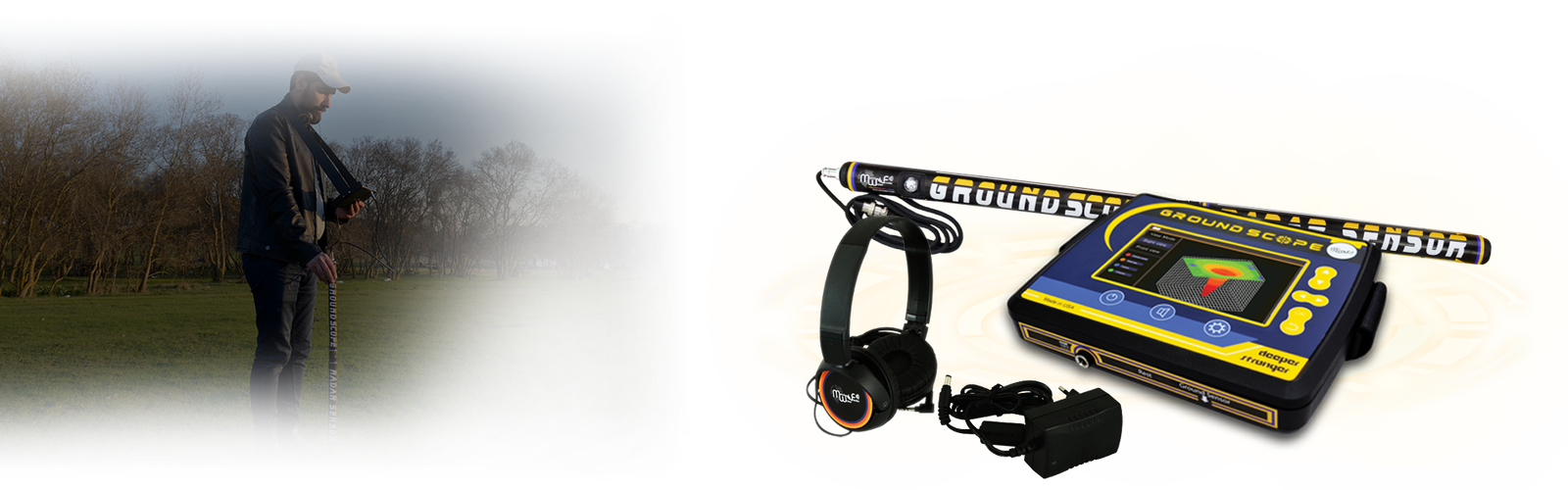
After thoroughly reviewing the market, analyzing the technology, and comparing geophysical capabilities, one device stands head and shoulders above the competition. If you are serious about professional treasure hunting and deep excavation, the GROUND SCOPE by MWF Metal Detectors is the absolute best 3D imaging system available today.
Here is a detailed breakdown of why the GROUND SCOPE dominates the 3D imaging market and why it earns our highest recommendation.

1. Unmatched Depth Penetration
While many competitors struggle to reach 5 or 8 meters, the GROUND SCOPE is engineered for extreme depths. Utilizing highly specialized geophysical scanning probes, this device can penetrate dense clay, rocky terrains, and highly mineralized soils to reach depths that other machines simply cannot touch. When you are looking for ancient burial chambers or deeply buried gold chests, this raw penetration power is non-negotiable.
2. The Most Advanced Proprietary 3D Software
The true genius of the GROUND SCOPE lies in its processing software. It features an incredibly intuitive, high-definition interface that renders raw data into stunning 3D graphics in real-time. You do not need a degree in geophysics to understand the screen. The device clearly color-codes the underground world:
- Red: Precious metals like gold, silver, and copper.
- Orange: metals.
- Blue: Underground voids, tunnels, caves, and ancient tombs.
- Green/Yellow: Normal soil and natural ground.

This software allows you to view the target from all angles, measure its exact depth in centimeters, and determine its shape before you ever break the surface with a shovel.
3. Live Scan and Pinpoint Accuracy system
The GROUND SCOPE offers a dynamic Live Scan mode. As you walk your grid, the screen updates instantly. If you pass over a significant anomaly, you see it immediately. This feature drastically reduces the time it takes to survey a large area. Furthermore, its pinpoint accuracy ensures that when you do decide to dig, you are digging in the exact right spot, saving immense physical labor.

4. 3D Ground scan system
The 3D Ground Scan System is the heart and most important technology in the GROUND SCOPE device. Unlike traditional sonar devices that simply emit a ring when they detect metal, this system performs a comprehensive geophysical survey and precise imaging of what lies beneath the earth’s surface, allowing you to see the target before you begin drilling.

5. Lightweight and Field-Ready Ergonomics
Historically, deep ground scanners were massive, heavy pieces of equipment that required two people to operate. MWF Metal Detectors engineered the GROUND SCOPE to be incredibly lightweight and portable. A single operator can carry the device, manage the tablet interface, and scan rugged, mountainous terrain for hours without experiencing severe fatigue.
6. Dual Detection of Metals and Voids
One of the greatest secrets of professional archaeology is that historical treasures are rarely just buried in the dirt. They are hidden inside tombs, caves, and underground vaults. Because the GROUND SCOPE excels at detecting subterranean voids alongside precious metals, it leads you directly to the environments where historical treasures are most likely to be found.
👉 Ready to stop digging blindly and start seeing the underground? Explore the ultimate system here: Get the GROUND SCOPE Today
⚖️ Comparative Analysis: GROUND SCOPE vs. Competitors
To further solidify why the GROUND SCOPE is our top recommendation, let us compare it directly against average industry competitors in the 3D imaging space.
| Feature | Average 3D Competitor | The GROUND SCOPE |
|---|---|---|
| Real-Time Live Scanning | Often Requires PC Transfer | Yes, Instant Tablet Rendering |
| User Interface | Complex, Requires Training | Highly Intuitive, Color-Coded |
| Depth Capabilities | Limited to 8-10 Meters | Extreme Depths (Exceeds Industry Standards) |
| Portability | Heavy, Bulky Harnesses | Lightweight, Single Operator Design |
| Void/Cave Detection | Inconsistent | Highly Accurate Blue Color-Coding |
🛠️ Pro Tips for Using Best 3D Imaging Gold Detectors in the Field
Owning the best equipment like the GROUND SCOPE is the first step. Operating it correctly ensures your success. Follow these professional tips to maximize your 3D scanning results:
- Walk a Strict Grid: 3D imaging relies on mathematics. You must walk in straight, parallel lines. Imagine a grid on the ground. If you walk haphazardly, the software cannot stitch the image together accurately, resulting in a distorted 3D map.
- Maintain Consistent Sensor Height: The scanning probe must remain at a consistent distance from the ground (usually just a few inches). If you bounce the probe up and down as you walk, you introduce false anomalies into the scan.
- Analyze the Shape, Not Just the Color: While seeing a red spot on your screen is exciting, look at its shape. A perfectly square or rectangular red object inside a blue void is highly likely to be artificial chest inside a tomb. A scattered, irregular red shape might just be a natural mineral deposit.
- Perform a Secondary Scan: If you find a massive target, do not start digging immediately. Turn 90 degrees and scan the exact same grid from a perpendicular direction. If the target appears clearly in both scans, you have confirmed its existence with absolute certainty.


❓ Frequently Asked Questions (FAQs) for Best 3D Imaging Gold Detectors:
1. Do I need a degree in geophysics to understand 3D ground scanners?
Not at all. While older systems from decades ago required specialized training, modern devices like the GROUND SCOPE are designed with the end-user in mind. The proprietary software translates complex mathematical resistivity data into simple, color-coded visual graphics. Red means metal, blue means a void. It is incredibly user-friendly and can be mastered in just a few hours of practice.
2. Can the GROUND SCOPE find small gold nuggets near the surface?
3D ground scanners are engineered for mass and depth. They are designed to find large caches of gold, treasure chests, ancient weapons, and underground tombs. If your primary goal is to find tiny, 1-gram gold flakes scattered near the surface, you should use a high-frequency VLF or Pulse Induction detector. You use a 3D scanner when you are looking for the main hoard.
3. How does soil mineralization affect 3D imaging?
Traditional coil detectors get completely “blinded” by iron-rich soil or wet salt. 3D imaging systems bypass this issue effectively. Because they map the physical anomalies and resistance of the earth, they can see through heavy mineralization. The software is smart enough to categorize natural iron rocks as ground noise, allowing the true anomalies (like a buried gold chest) to stand out clearly on your screen.
4. Are 3D imaging detectors legal to use everywhere?
The laws governing metal detecting and geophysical surveying vary drastically by country and region. While many places allow detecting on private property with the owner’s permission, searching on historical sites, national parks, or protected archaeological zones without a government permit is strictly illegal globally. Always consult your local antiquity and mining laws before conducting a scan. For general guidelines, refer to the Wikipedia page on Archaeological Ethics.
5. Why is detecting voids (caves/tunnels) so important for treasure hunters?
History teaches us that people rarely buried massive amounts of gold directly in the dirt. Kings, commanders, and wealthy merchants hid their treasures inside constructed vaults, underground caves, and stone tombs. Therefore, finding the empty underground space (the void) is often the exact path to finding the gold. The GROUND SCOPE excels at identifying these subterranean structures.
🏁 Conclusion: Stop Guessing, Start Seeing
The era of digging endless holes based on a faint, confusing audio beep is officially over. The future of professional treasure hunting and archaeological exploration belongs to those who can visualize the underground world.
Investing in a 3D imaging gold detector is the most significant upgrade a prospector can make. By understanding the science of ground-penetrating technology and recognizing the vast limitations of traditional coils, you position yourself for unprecedented success in the field.
For those who demand the absolute pinnacle of deep-seeking technology, the GROUND SCOPE remains unrivaled. Its combination of extreme depth penetration, highly intuitive 3D rendering software, and the ability to detect both precious metals and underground voids makes it the ultimate excavation tool.
Equip yourself with the power of sight. Map your terrain, identify your targets with pinpoint accuracy, and turn your historical theories into monumental golden discoveries.
Ready to revolutionize your treasure hunting?
👉 Discover the GROUND SCOPE Today
 GOLD DETECTORS
 METAL DETECTORS
 TREASURES
 GEMS DETECTORS
 WATER DETECTORS
 CAVES DETECTORS
 SECURITY SYSTEMS
 VOGEL DETECTORS
 PORTABLE METAL DETECTORS
 Ground Imaging Systems
 Long Range Locator Systems
 Geophysical Survey Systems
 U-VLF SYSTEM
 Ionic Search Systems
 .Acoustic detection Systems
 Integrated Detection Systems
 Hand-held & Pinpointer Systems